
Port Douglas sits at a junction that exists nowhere else on earth. To the east, the Great Barrier Reef. To the north, the Daintree Rainforest. Between them, the Coral Sea and some of the most biodiverse coastline in Australia.
The result is a concentration of wildlife that is, without exaggeration, extraordinary. You are not going to see a cassowary, a sea turtle, a saltwater crocodile, and a humpback whale in the same week in many other places on this planet. In Tropical North Queensland, that is a fairly ordinary itinerary.
This is your guide to what lives here, what you can realistically expect to see, and where to go to find it.
| Animal | Where | Best time |
|---|---|---|
| Southern cassowary | Daintree, Cape Tribulation | Early morning, year-round |
| Green sea turtle | Agincourt Reef, Low Isles | Year-round |
| Saltwater crocodile | Daintree River | Year-round |
| Humpback whale | Outer Reef, Flagstaff Hill | July to September |
| Dwarf minke whale | Agincourt Ribbon Reefs | May to July |
| Spinner dolphin | Transit to Agincourt Reef | Year-round |
| Indo-Pacific bottlenose dolphin | Port Douglas to Outer Reef | Year-round |
| Reef shark | Agincourt Ribbon Reefs | Early morning, year-round |
| Spectacled flying fox | Port Douglas, Daintree | Dusk, year-round |
| Rainbow lorikeet | Port Douglas town | Dawn, year-round |
| Boyd’s forest dragon | Cape Tribulation, Jindalba Boardwalk | Early morning, year-round |
| Ulysses butterfly | Daintree, Cape Tribulation | Year-round |
| Australian green tree frog | Port Douglas accommodation, gardens | After dark, year-round |
| Bennett’s tree kangaroo | Daintree, Mossman to Cape Tribulation | Year-round |
The Southern Cassowary
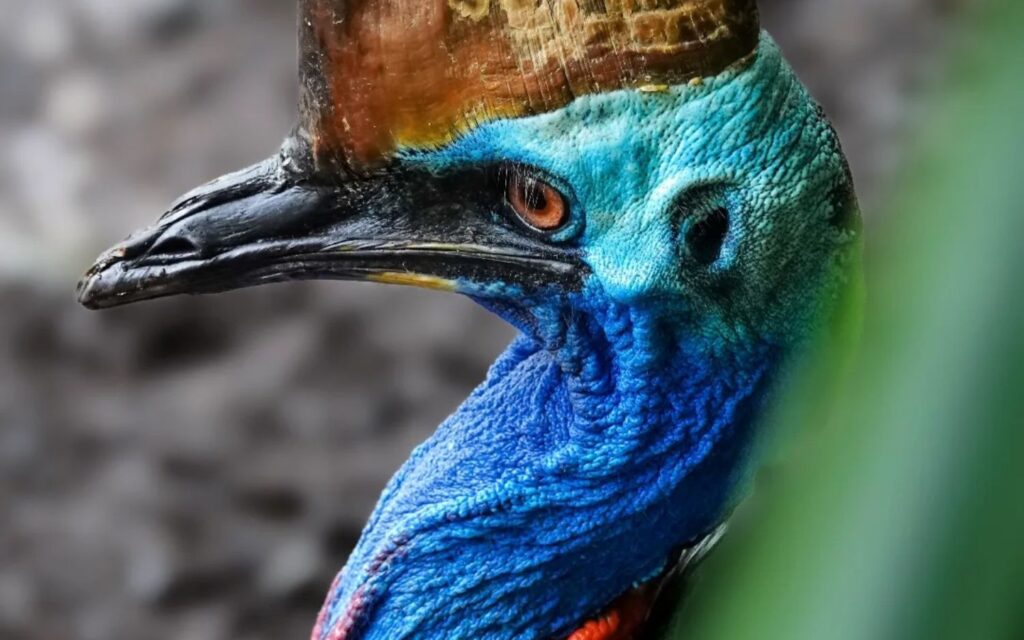
The cassowary is the wildlife encounter that Port Douglas visitors talk about for years. The third largest bird on earth, standing up to 1.8 metres tall, weighing up to 70kg, and wearing an expression of complete indifference to your presence.
They cannot fly, but they can run at 50km/h through dense rainforest, jump 1.5 metres from standing, and swim across rivers without breaking stride. The casque on their head has scientists still debating its purpose. The cassowary has been here for 60 million years and is not particularly concerned about the debate.
There are fewer than 4,000 southern cassowaries left in the wild. Almost all of them live in Tropical North Queensland. They are a keystone species and the rainforest depends on them for seed dispersal.
WHERE TO FIND CASSOWARIES
The Daintree Rainforest and Cape Tribulation have the highest density of wild cassowaries in Australia. Early morning drives on the Cape Tribulation road regularly result in roadside sightings. Mossman Gorge and the rainforest tracks north of Port Douglas are also active cassowary territory. A Cape Tribulation and Daintree day tour gives you a full day in prime cassowary habitat, and Wildlife Habitat Port Douglas offers guaranteed encounters with resident cassowaries if you want a closer look before heading into the wild.
If you encounter one in the wild, keep your distance and stay calm. They have a dagger-like inner claw up to 12cm long and will use it if they feel threatened. Observe from where you are. It will move on in its own time.
Green Sea Turtles
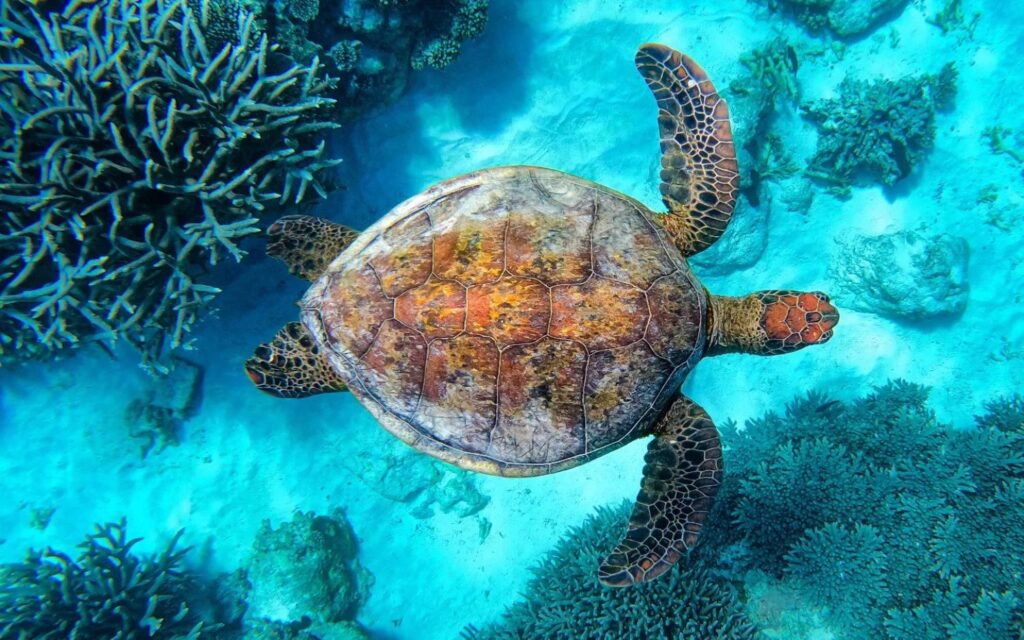
Green sea turtles are one of the most reliably spotted animals on the Great Barrier Reef off Port Douglas, appearing on virtually every snorkelling trip to the outer reef. Unhurried, ancient, completely unbothered by the snorkellers watching from above.
They can live for up to 80 years. They return to the same beach where they were born to nest, navigating thousands of kilometres of open ocean using the earth’s magnetic field. They have been doing this for 100 million years.
WHERE TO FIND GREEN SEA TURTLES
The outer reef sites off Port Douglas, particularly the Agincourt Ribbon Reefs, offer turtle encounters on virtually every trip. They are most commonly spotted during snorkelling at the reef sites rather than on the transit out. Low Isles, a shorter trip from the marina, is also excellent for turtle sightings in the shallower waters around the coral cay.
Saltwater Crocodiles
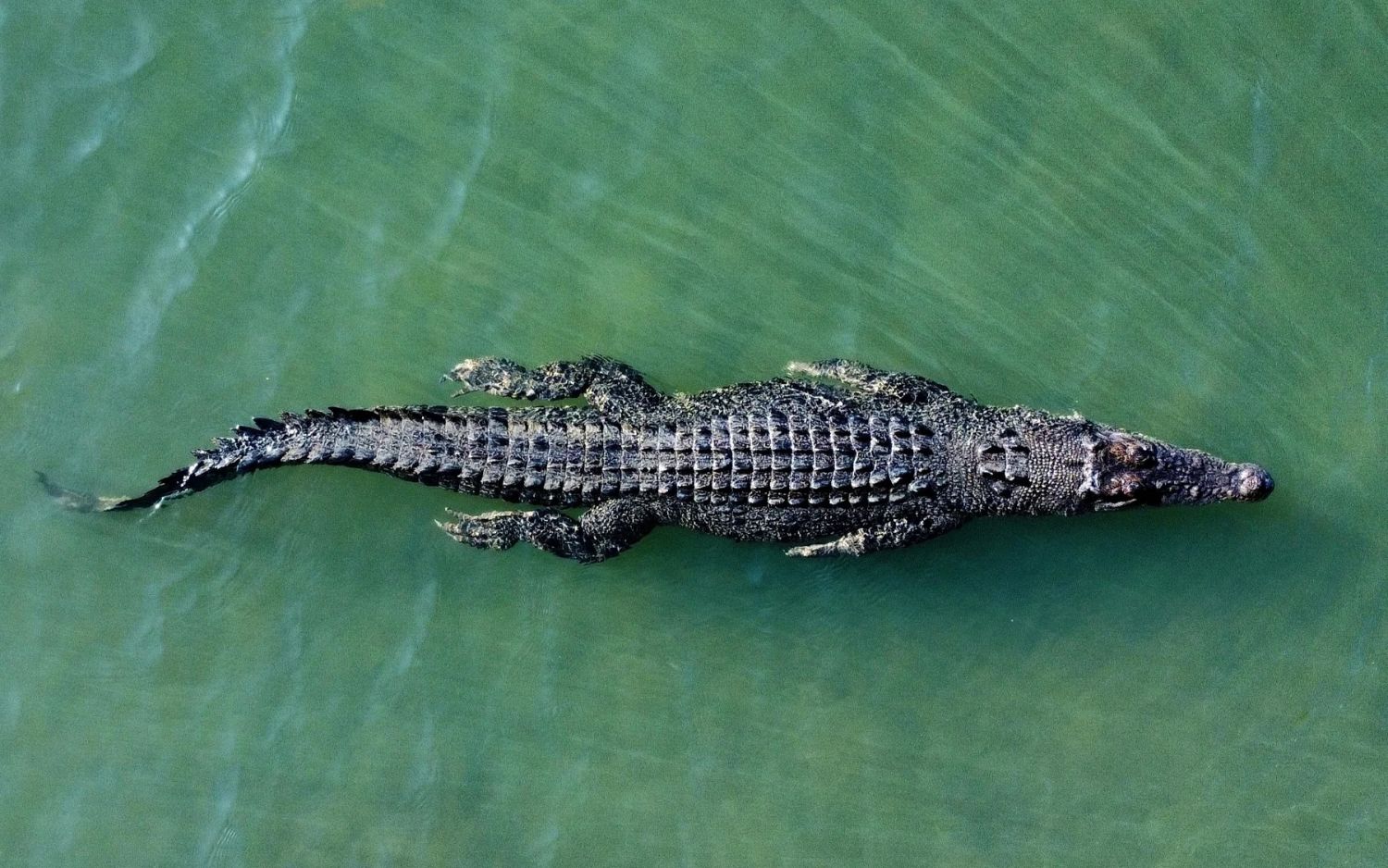
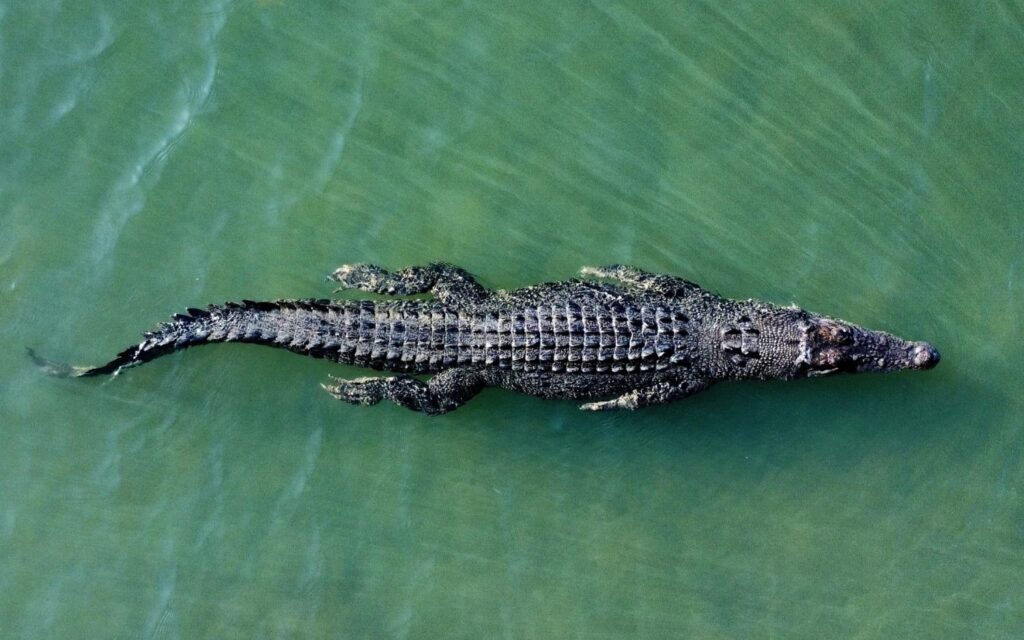
The saltwater crocodile is the largest living reptile on earth and the apex predator of Tropical North Queensland’s waterways. They can grow up to six metres in length, weigh over 1,000kg, and have a bite force stronger than any other animal alive today.
They have survived virtually unchanged for 200 million years. Whatever killed the dinosaurs did not bother the crocodile.
WHERE TO FIND SALTWATER CROCODILES
The Daintree River is the best place to see a saltwater crocodile safely. Dawn river cruises run by experienced local guides consistently spot crocodiles on the riverbanks and in the water. The guides know exactly where to look and the crocodiles are genuinely visible, often at close range from the boat. The Cape Tribulation and Daintree day tour includes a Daintree River cruise as part of the day.
For a more controlled encounter, Wildlife Habitat Port Douglas runs a Swim with the Salties experience at their CrocArena, where you enter a submerged cage alongside a resident saltwater crocodile. Hartley’s Crocodile Adventures, about 40 minutes south near Palm Cove, is another dedicated croc park with feeding shows and boat cruises through their lagoon.
Freshwater swimming holes in the region should always be checked for crocodile warning signs before entering. In the Daintree and north of Port Douglas, crocodiles inhabit tidal rivers, estuaries, and occasionally beaches and coastal areas.
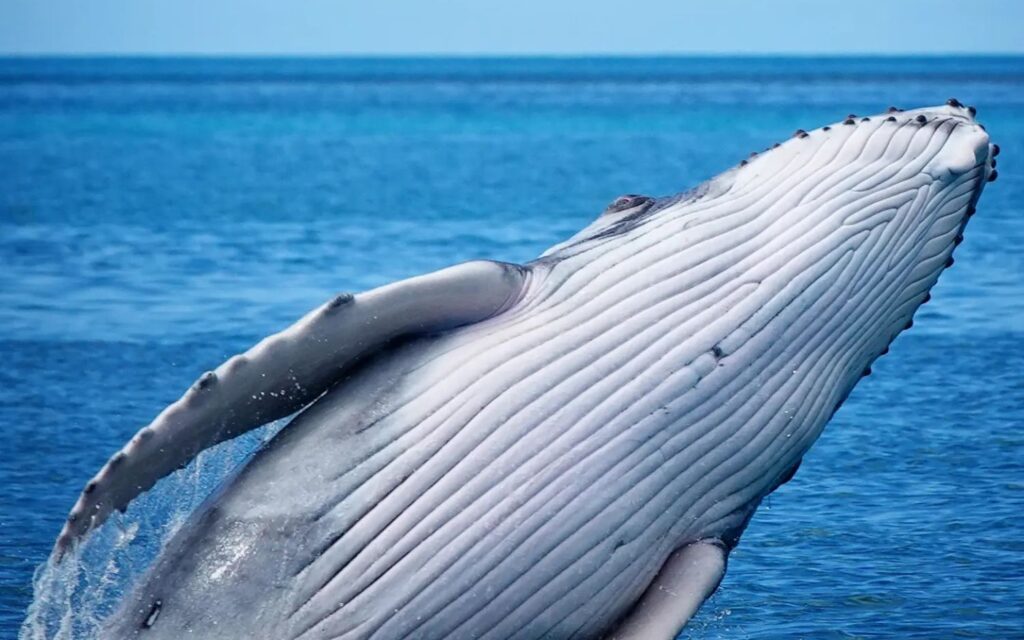
Humpback Whales and Dwarf Minke Whales
Between June and September, the waters off the Far North Queensland coast fill with two species of whale on their annual migration north.
Humpback whales arrive from July through September. They are the showstoppers, breaching, tail-slapping, and surfacing close to boats with the kind of presence that makes passengers go silent. Watching a 40-tonne animal breach 50 metres from your boat is an experience that does not require much description.
Dwarf minke whales are smaller and far more curious. They arrive earlier, from May through July, concentrated around the Agincourt Ribbon Reefs off Port Douglas. Unlike humpbacks, the encounter with minkes happens in the water. Port Douglas is the only place in Australia where you can legally swim with them, on boats holding rare permits from the Great Barrier Reef Marine Park Authority.
WHERE TO FIND WHALES NEAR PORT DOUGLAS
All reef tour boats from Port Douglas transit through whale territory between June and September. Quicksilver reef tour and Wavelength reef cruise both hold permits allowing passengers to snorkel with dwarf minke whales if encountered. Humpbacks can also be spotted from shore at Flagstaff Hill lookout during peak season in July and August. For more detail on the season and what to expect, see our whale watching guide.
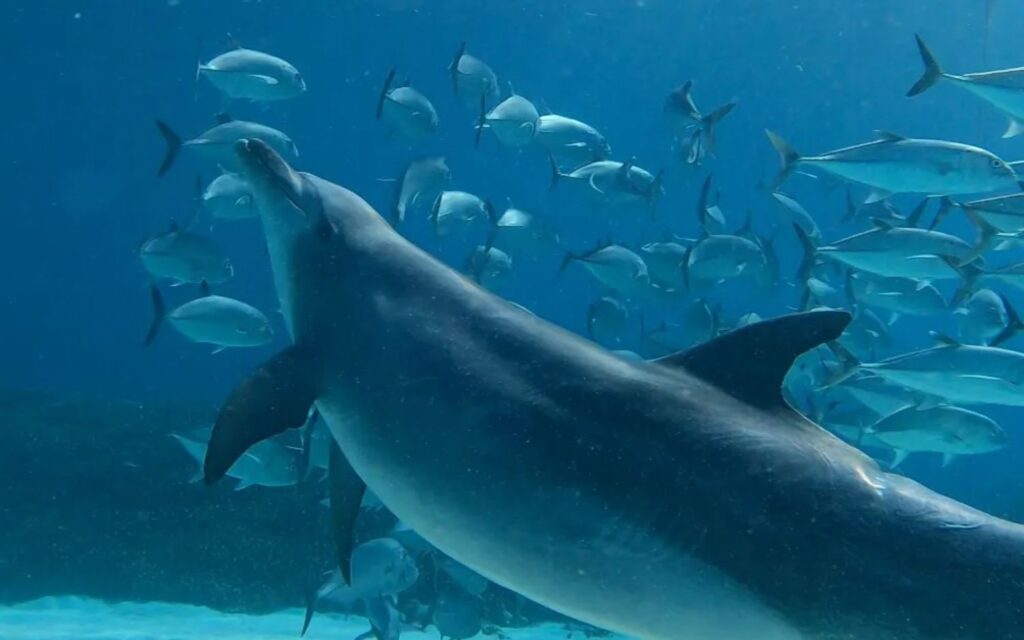
Spinner Dolphins
Spinner dolphins are one of the most reliably spotted marine mammals on reef trips out of Port Douglas. Named for their habit of leaping clear of the water and spinning on their axis, they are the kind of sighting that brings every passenger to the bow rail at once.
Indo-Pacific bottlenose dolphins are also common in the waters between Port Douglas and the outer reef. Both species are frequently encountered on the transit out to the Agincourt Ribbon Reefs, travelling in pods that range from a handful of animals to several dozen.
WHERE TO FIND SPINNER DOLPHINS
Any reef tour departing from Port Douglas marina passes through dolphin territory. They are most commonly spotted on the outbound transit rather than at the reef itself. The Quicksilver reef tour and Wavelength reef cruise both pass through the feeding grounds where spinner dolphins are regularly active. No special permits or detours required – they tend to find the boats.
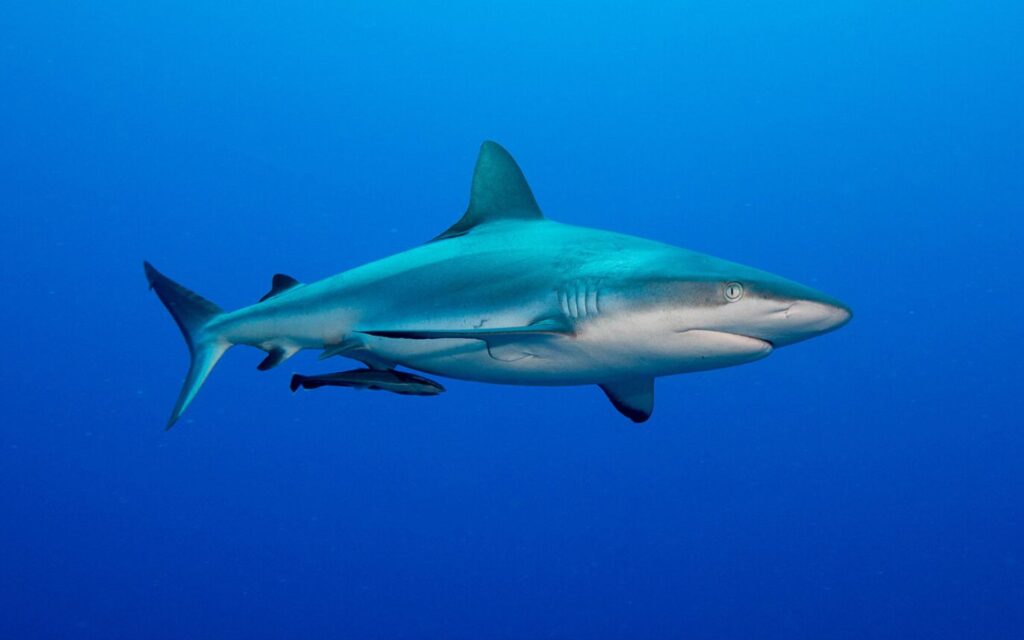
Reef Sharks
Whitetip and blacktip reef sharks are commonly spotted on the outer reef off Port Douglas, particularly at the Agincourt Ribbon Reefs early in the morning. They are completely indifferent to your presence, which is what makes the encounter so striking.
Whitetip and blacktip reef sharks are the species most commonly seen on the outer reef off Port Douglas. Both are slender, fast, and entirely harmless to snorkellers unless provoked, which nobody does. They patrol the reef edges and swim in the mid-water column, usually spotted moving at speed before disappearing into the blue.
WHERE TO FIND REEF SHARKS
The Agincourt Ribbon Reefs on the outer reef. They are most commonly spotted early in the day before boat traffic increases. The Quicksilver reef tour heads directly to Agincourt Reef, and any of our reef tour operators will be familiar with the shark territory at their sites.
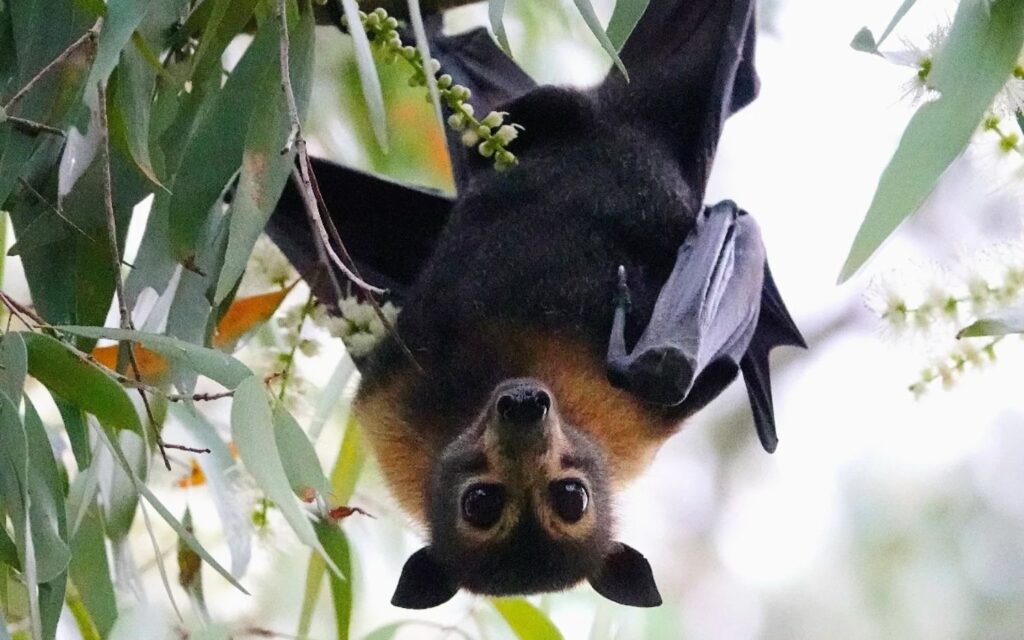
Spectacled Flying Foxes
The spectacled flying fox is the world’s largest bat, with a wingspan of up to 1.5 metres, and one of the most visible wildlife species in Port Douglas. At dusk, large colonies leave their roosts across the town and the Daintree to feed, filling the sky with their silhouettes. They are a critical pollinator of the rainforest.
The spectacled flying fox gets its name from the rings of pale fur around its eyes. Up close, they have a face that is unexpectedly compelling. Hanging upside down in flowering trees during the day, they are one of the most photographed animals in the region, and deservedly so.
WHERE TO FIND SPECTACLED FLYING FOXES
Port Douglas town has a flying fox colony that is active at dusk. The Daintree Rainforest has large populations throughout. Wildlife Habitat Port Douglas has resident flying foxes in their free-flight aviary.
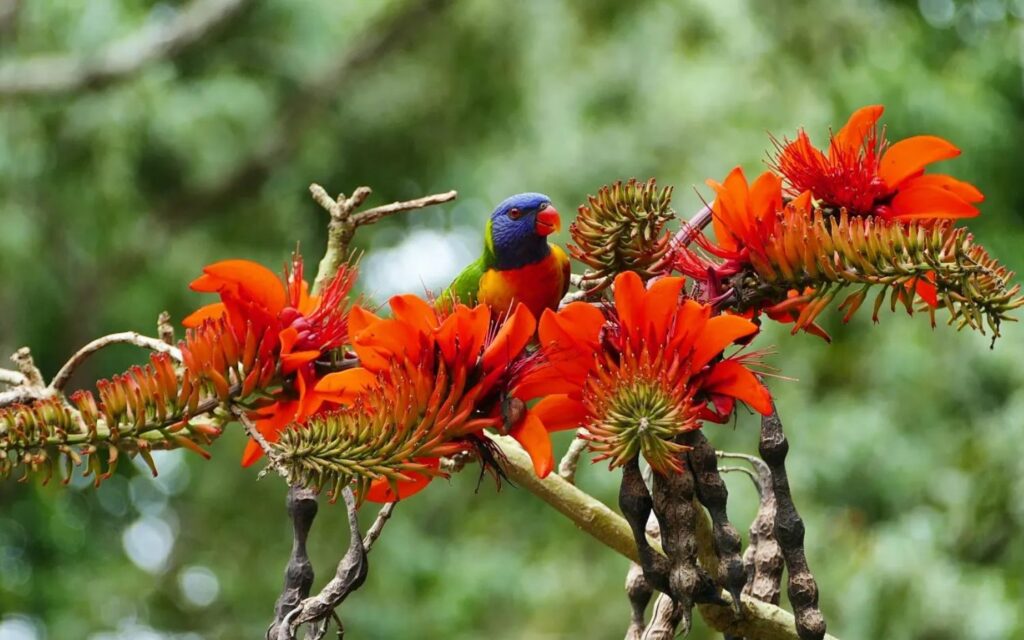
Rainbow Lorikeets
The rainbow lorikeet is the alarm clock of Port Douglas. It is loud, it is colourful, it is completely relentless, and it arrives at dawn without asking whether you were planning to sleep in.
They are also one of the most vibrantly coloured birds in Australia, with electric red, blue, green, orange, and yellow plumage that looks almost artificially bright in person. They travel in flocks, feed on nectar and pollen, and make an extraordinary amount of noise doing both.
WHERE TO FIND RAINBOW LORIKEETS
Everywhere in Port Douglas and the surrounding rainforest. The flowering trees in the town gardens and along Macrossan Street attract large flocks, particularly in the morning. Wildlife Habitat Port Douglas offers feeding encounters with resident lorikeets.
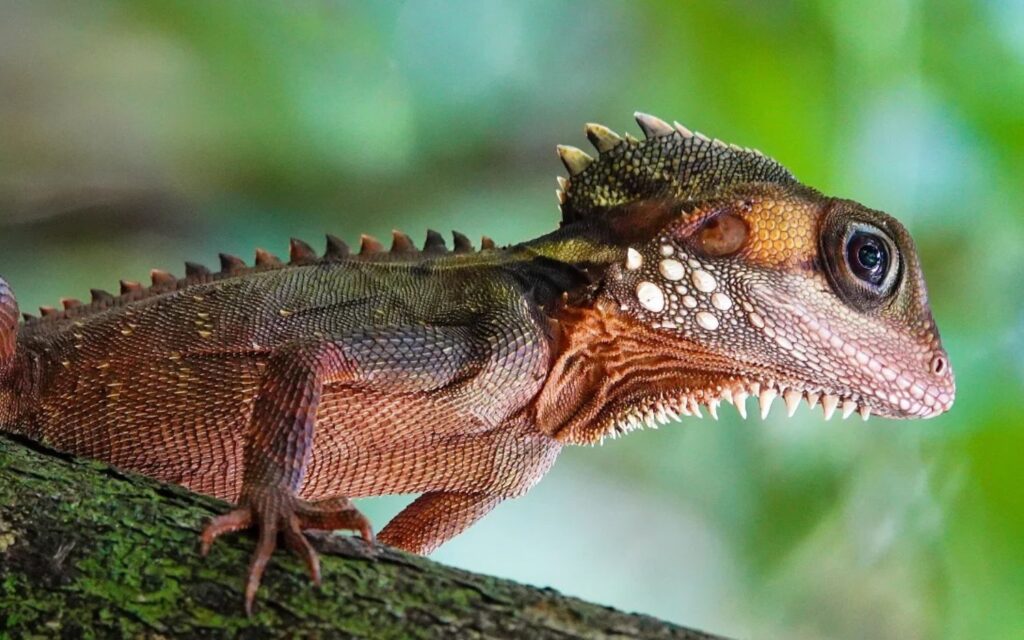
Boyd's Forest Dragon
One of the Daintree’s most distinctive and least-seen residents, Boyd’s forest dragon is a lizard that appears to have been designed by committee. Large sail-like crest, spiny scales, and an expression that suggests it has seen empires rise and fall and remains unimpressed by all of them.
They are slow-moving and rely on camouflage, sitting motionless on vertical tree trunks in the rainforest. The key to spotting one is knowing to look at the trunks rather than the canopy.
WHERE TO FIND BOYD’S FOREST DRAGONS
The walking tracks through the Daintree, particularly around Cape Tribulation and the Jindalba Boardwalk. Early morning is the best time, when they are warming on sun-dappled trunks. The Tony’s Tropical Tours day trip includes guided walks through exactly this kind of habitat.
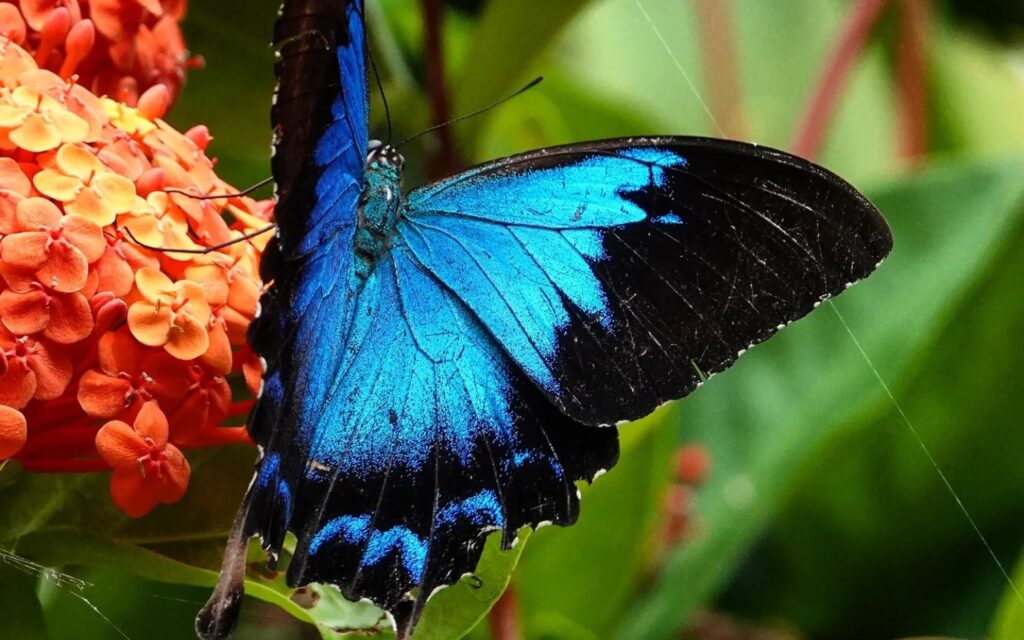
Ulysses Butterflies
The Ulysses butterfly is the unofficial symbol of Tropical North Queensland tourism and it earns the title. An iridescent electric blue wingspan of up to 14cm, moving fast through the rainforest canopy, it stops people in their tracks every time.
They are attracted to blue objects, which is worth knowing if you want to attract one: wearing blue clothing or leaving blue items in a sunny garden spot can draw them in.
WHERE TO FIND ULYSSES BUTTERFLIES
The Daintree Rainforest and Cape Tribulation areas are the best locations. The gardens of properties in Port Douglas with flowering native plants also attract them. Wildlife Habitat Port Douglas has a butterfly garden with resident Ulysses butterflies.
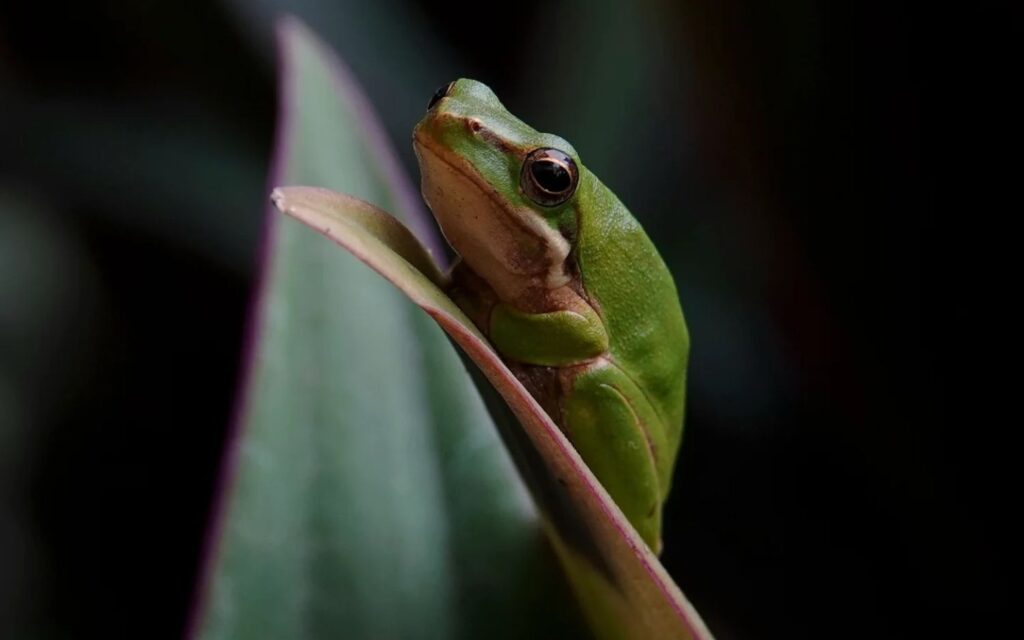
Australian Green Tree Frog
The Australian green tree frog is one of the most charming wildlife encounters in Port Douglas, and it requires no tour, no early alarm, and no boat. It comes to you.
Bright apple green, plump, and entirely unbothered by human company, green tree frogs are a fixture of tropical accommodation across Far North Queensland. They favour cool, moist spots and are commonly found clinging to bathroom walls, perched above doorframes, or sitting in plant pots on the veranda after dark. Guests who find one tend to leave it exactly where it is for the duration of their stay.
WHERE TO FIND GREEN TREE FROGS
Anywhere in Port Douglas after dark, particularly around outdoor lights that attract the insects they feed on. Gardens, verandas, and shaded corners of accommodation are all prime habitat. No effort required – if one is around, you will find it.
Bennett's Tree Kangaroo
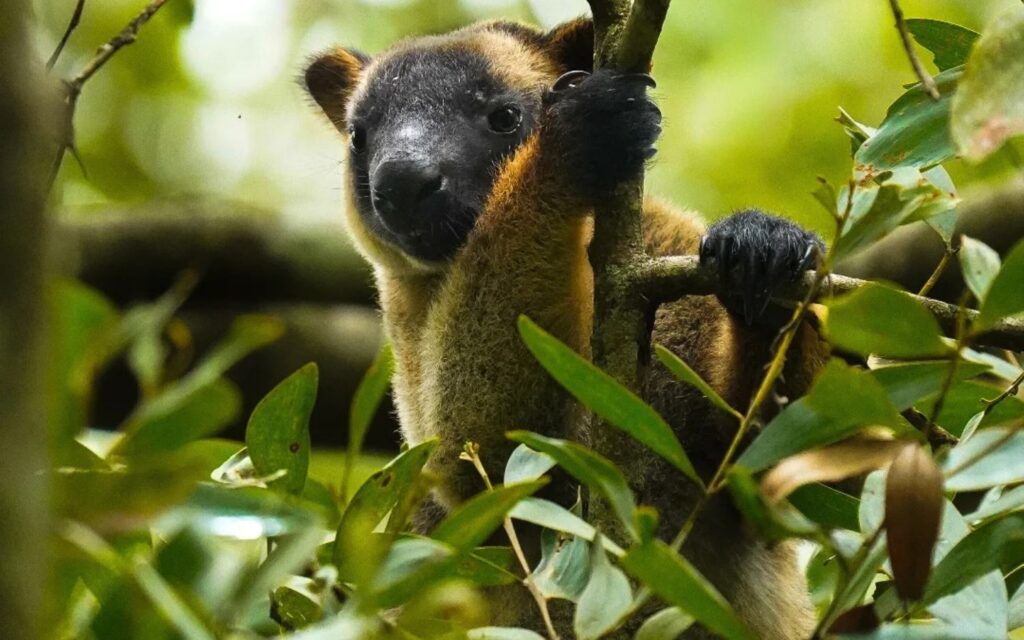
Bennett’s tree kangaroo is a rare rainforest marsupial found in the Daintree between Mossman and Cape Tribulation. Unlike ground-dwelling kangaroos, it lives in the upper canopy, feeds on leaves and fruit, and moves through the trees with a confidence that makes a wild sighting genuinely rewiring.
They are rare and genuinely difficult to spot in the wild, which makes a sighting all the more rewarding.
WHERE TO FIND BENNET’S TREE KANGAROO
The Daintree Rainforest between Mossman and Cape Tribulation. They are most commonly spotted by guides who know the specific trees they favour. Wildlife Habitat Port Douglas has resident tree kangaroos in a naturalistic setting.
Where to Base Yourself
All of this wildlife is within an hour of Port Douglas. The cassowary, the crocodile, the tree kangaroo and the rainforest dragon are all in the Daintree, 45 minutes north. The sea turtles, reef sharks and whales are 90 minutes offshore on the Great Barrier Reef. The lorikeets and flying foxes come to you.
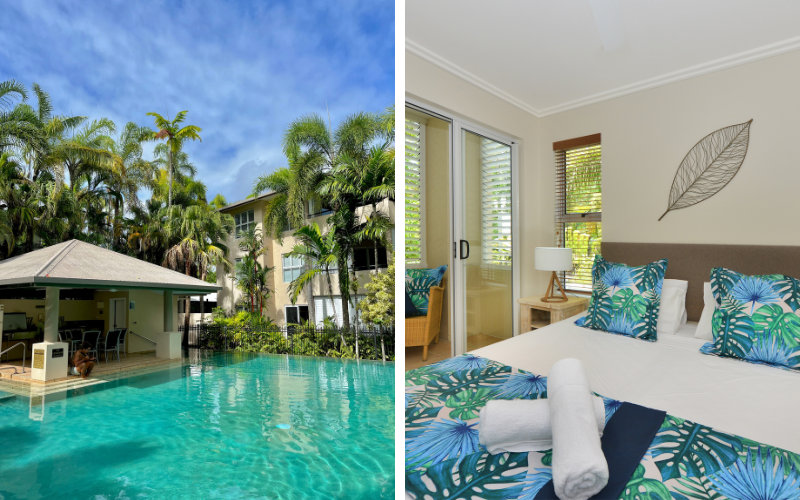
Cayman Villas sits in the heart of Port Douglas, 200 metres from Four Mile Beach and a short walk from the marina where reef tour boats depart daily. Our tour desk can help organise reef trips, Daintree day tours, river cruises and wildlife park visits from the one place.
The wildlife is here. Let us help you find it.
Frequently Asked Questions
Port Douglas sits between the Great Barrier Reef and the Daintree Rainforest, giving it one of the most concentrated wildlife lineups in Australia. You can see southern cassowaries, green sea turtles, saltwater crocodiles, humpback and dwarf minke whales, reef sharks, spinner dolphins, spectacled flying foxes, rainbow lorikeets, Boyd’s forest dragons, Ulysses butterflies, Australian green tree frogs, and Bennett’s tree kangaroos, all within an hour of town.
Year-round, but the season shapes what you see. Humpback whales arrive from July to September. Dwarf minke whales are concentrated around the outer reef from May to July. Cassowaries, crocodiles, turtles, reef sharks, and dolphins are active all year. If whale watching is a priority, July and August are the peak months.
The Daintree Rainforest and Cape Tribulation road are the best locations for wild cassowary sightings. Early morning drives north of Port Douglas offer the highest chance of a roadside encounter. Wildlife Habitat Port Douglas is a reliable option for a guaranteed close-up if you want to see one before heading into the rainforest.
Yes. Port Douglas is the only place in Australia where you can legally swim with dwarf minke whales. They are present around the Agincourt Ribbon Reefs from May to July, and a small number of reef tour operators hold special permits from the Great Barrier Reef Marine Park Authority allowing in-water encounters.
Yes, on a guided Daintree River cruise. Experienced local guides know exactly where crocodiles rest and move, and the viewing is done from the boat at safe distances. You should never enter rivers, estuaries, or tidal waterways north of Port Douglas without checking for crocodile warning signs first.
Both. Some of the best wildlife in the region comes to you: rainbow lorikeets arrive at dawn in the town gardens, spectacled flying foxes fill the sky at dusk, and Australian green tree frogs turn up on accommodation walls after dark. For reef wildlife (turtles, sharks, dolphins, whales) and rainforest species (cassowaries, crocodiles, tree kangaroos), guided tours give you significantly better access and success rates.
Bennett’s tree kangaroo is one of the rarest sightings in the wild, a rainforest marsupial that lives in the upper canopy of the Daintree and is genuinely difficult to spot without a guide who knows the specific trees it favours. The dwarf minke whale swim is also exceptionally rare globally, with Port Douglas being the only legal in-water encounter location in Australia.
Central Port Douglas puts you within walking distance of the marina, where reef tour boats depart daily for the Agincourt Ribbon Reefs. The Daintree is 45 minutes north by road. Staying centrally means you can be on a reef boat at dawn and back for dinner without losing half the day to transfers.
Related Reading
Whale Watching in Port Douglas – The full seasonal guide to humpback and dwarf minke whale sightings, shore viewpoints, and reef tour operators.
Explore the Daintree and Cape Tribulation – What to see and do in the world’s oldest tropical rainforest, including cassowary habitat, river cruises, and Cape Trib beaches.
Why Port Douglas Is the Best Base for Exploring Tropical North Queensland – How staying in central Port Douglas gives you effortless access to both the reef and the rainforest in a single trip.
