
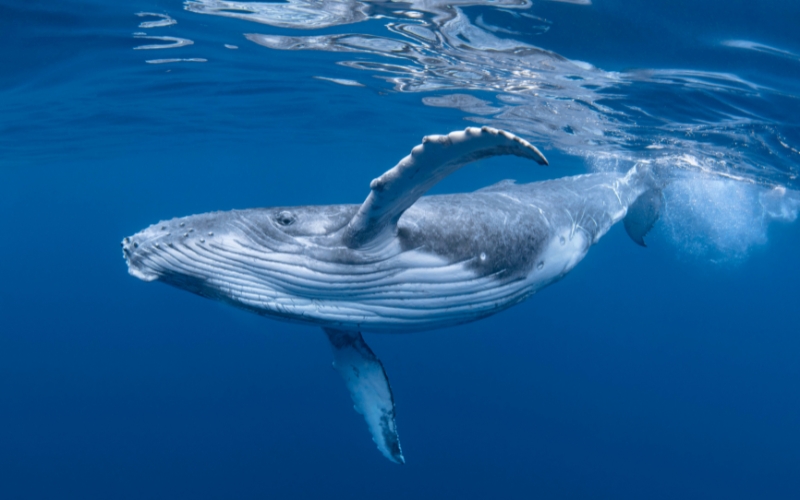
Port Douglas has a quiet superpower that most visitors don’t know about until they’re already here. Between June and September, the waters off the Far North Queensland coast fill with migrating humpback whales and the remarkably curious dwarf minke whale, and the town sits right on the doorstep of some of the best viewing opportunities in Australia.
This is not Hervey Bay. There are no dedicated whale-watching vessels circling pods all day. What Port Douglas offers is something arguably better: the chance to encounter whales as part of a full day on the Great Barrier Reef, often at close range, on boats small enough to stop and linger when a whale surfaces nearby.
The Great Barrier Reef is the only place in Australia where you can legally swim with dwarf minke whales — a handful of reef tour operators hold rare permits from the Great Barrier Reef Marine Park Authority to allow this under strict conditions.
Here is everything you need to know to make the most of whale season. If you are still deciding when to visit, our guide to the best time to visit Port Douglas covers the full seasonal picture.
When to Come: Understanding Whale Season
Whale season in Port Douglas runs from June through to September, with the peak window sitting squarely in July and August. If you can only visit once, July is your best bet. Sightings are most frequent and the weather tends to cooperate. For a full breakdown of what each month looks like in Port Douglas, see our dry season vs green season guide.
The two species you are likely to encounter are quite different from each other, and knowing which is which helps set expectations.
Humpback Whales
Humpbacks migrate north along the Queensland coast to breed and give birth in the warmer tropical waters. They are the showstoppers — big, dramatic animals that breach, slap their tails, and generally put on a performance. You are most likely to spot them from the boat on the way out to the outer reef, particularly in the deeper shipping channels. Sightings are common from July through September.
Swimming with humpbacks is not permitted under any circumstances.
Dwarf Minke Whales
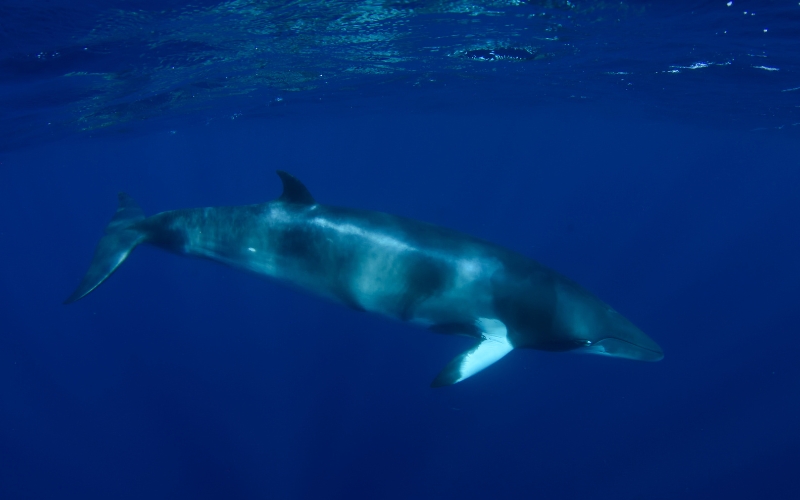
Dwarf minkes are a different experience entirely. Smaller and far more inquisitive, they tend to seek out boats rather than avoid them. They arrive earlier in the season, with the best sightings from May through to July, concentrated around the Agincourt Ribbon Reefs off Port Douglas.
Unlike humpbacks, minkes do not breach. You will not see them at the surface in the same way. The encounter happens in the water, which is exactly what makes Port Douglas so extraordinary — and why booking the right boat matters.
Key tip: If swimming with minke whales is your priority, target June or early July and book with an operator that holds a swim permit. By August, minke numbers thin out and humpbacks dominate.
Getting Out on the Water: The Best Boats from Port Douglas
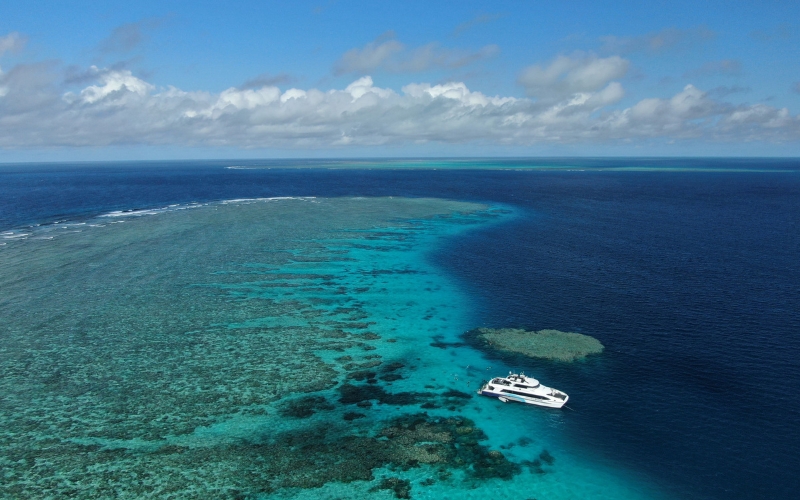
Port Douglas does not run dedicated whale-watching cruises. Instead, whale encounters happen as part of full-day reef tours, which is genuinely the better deal: you get the Great Barrier Reef and a real chance at whale sightings in the same trip. Here are the operators worth knowing about.
Wavelength Reef Cruises
Wavelength Reef Cruises is a small-group, marine biologist-led operation and arguably the best choice for travellers who want genuine whale encounters rather than a glimpse from a crowded deck. The boat carries far fewer passengers than the larger catamarans, which means the skipper can stop and wait when whales are spotted.
Wavelength departs Crystalbrook Superyacht Marina at 8.10am and returns around 4.30pm, visiting three outer reef sites. On the 90-minute journey out, passing Low Isles, dolphin sightings are common and winter whale encounters are a real possibility. Wavelength holds a GBRMPA permit to allow passengers to snorkel with dwarf minke whales if encountered at the reef sites, entirely on the whales’ terms. In practice, encounters happen when minkes choose to approach the moored vessel. Wavelength’s own site notes this is occasional rather than frequent, and the window is June and July only.
Calypso Reef Cruises
Calypso Reef Cruises is a purpose-built 25-metre catamaran departing from 44 Wharf Street at 8.45am, returning around 4.15pm. It visits three reef sites daily and carries up to 85 passengers. Whales are regularly spotted from the top deck sunlounges during the transit to and from the reef between July and September. Calypso also offers guided snorkelling and scuba diving at each site. Whales are listed as a seasonal bonus on their own site, with sightings typically from July through September — no swim permit is held.
Silversonic
Silversonic is one of the fastest vessels to the outer reef and holds one of the rare Great Barrier Reef Marine Park Authority permits to allow passengers to swim with dwarf minke whales if encountered. Departures are from Crystalbrook Marina at 8.30am (boarding from 7.45am), returning at 4.30pm. The maximum of 90 passengers keeps it manageable, and the swim-with-minkes permit makes this a strong choice for July and August visitors chasing that experience. Note that actual in-water encounters depend entirely on whether minkes approach — crew confirm this is a genuine bonus rather than a reliable daily occurrence.
Poseidon Outer Reef Cruises
Poseidon holds one of only three GBRMPA permits in the area allowing passengers to swim with dwarf minke whales. The vessel carries a maximum of 65 passengers and departs Crystalbrook Superyacht Marina at 8.30am (boarding from 7.30am), returning at 4.30pm. It visits three sites at the Agincourt Ribbon Reefs daily, with snorkelling and scuba diving on offer at each. During minke encounters, groups of up to 10 swimmers are positioned on a floating line — the whales approach on their own terms, and Poseidon’s own site notes encounters are frequent during winter months but can never be guaranteed. A solid alternative to Silversonic if the swim-with-minkes experience is your priority and Silversonic is fully booked.
Spotting Whales from Shore
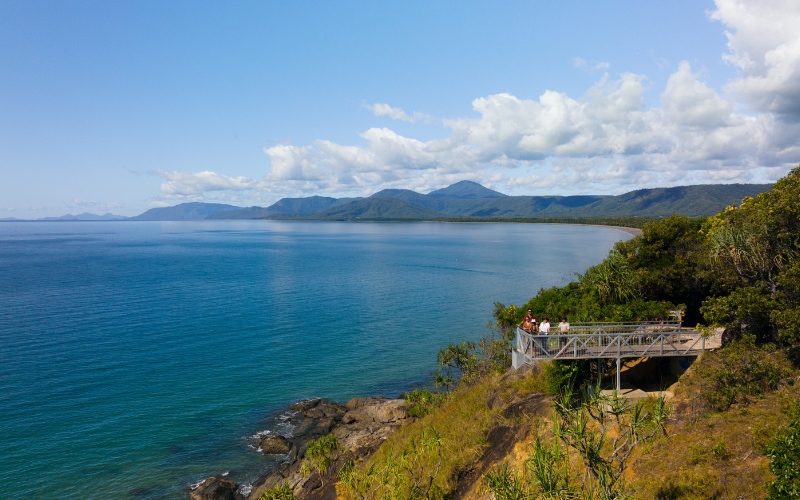
You do not need to get on a boat to have a whale encounter in Port Douglas. During peak season, humpbacks can be spotted from elevated vantage points along the coast, and the town makes it remarkably easy.
Flagstaff Hill Lookout
This is the standout shore-based spot. Sitting 74 metres above sea level at the northern end of Macrossan Street, Flagstaff Hill offers 360-degree views across Four Mile Beach, the Coral Sea, and the Daintree Rainforest. During the migration season, humpbacks and occasionally dwarf minkes can be seen offshore, particularly in the waters near the Agincourt Ribbon Reefs. There are no facilities or guided tours up here. Just a viewing platform, the open ocean, and a pair of binoculars if you bring them.
Access is easy. You can walk the 1.5-kilometre Flagstaff Hill Walking Trail from the northern end of Four Mile Beach, cycle up, or drive and park for free near the top. For more of Port Douglas’s best walking routes, see our walks and hikes guide.
Four Mile Beach
The beach itself is worth walking during whale season. The long, north-facing stretch of sand gives you uninterrupted views out to the Coral Sea, and humpbacks have been spotted breaching well within view of the shoreline during July and August. Early morning and late afternoon tend to offer calmer water and better visibility. Bring binoculars.
Rex Smeal Park
Sitting at the northern tip of town, Rex Smeal Park is a quieter alternative to the main beach. The elevated grassed area looks directly out over the water and connects to the Flagstaff Hill trail. Worth stopping at on an evening walk if you are staying nearby.
Shore-based sightings are never guaranteed. Whales move. But during peak July and August, local reports of humpbacks visible from Flagstaff Hill are common enough that it is worth building a morning up there into your stay.
Tips for Making the Most of Whale Season
A few things that will genuinely improve your chances and your experience:
Book reef tours early. Whale season coincides with Port Douglas’s peak winter period. The better operators, particularly Wavelength and the liveaboard trips with Eye to Eye, fill up weeks in advance. If you are visiting in July, book before you leave home.
Go in July if you can choose. July gives you the best shot at sightings. Minkes are still present, humpbacks are arriving in numbers, and the weather is typically at its most settled.
Bring binoculars. Both on the boat and from shore, a decent pair of binoculars transforms a distant splash into a proper sighting.
Wear layers on the boat. Winter mornings on the water off Port Douglas can be surprisingly cool, particularly on the 90-minute transit to the outer reef. A light jacket makes the journey far more comfortable.
Manage expectations, but stay optimistic. No operator can guarantee whale sightings — these are wild animals in open ocean. That said, multiple sightings per trip are common during peak season, and even if the whales do not appear, you are still on the Great Barrier Reef.
Check the Low Isles option. Half-day and full-day trips to Low Isles, just off the Port Douglas coast, do occasionally encounter humpbacks. Less likely than the outer reef run, but the shorter trip suits families or those who want a gentler day on the water.
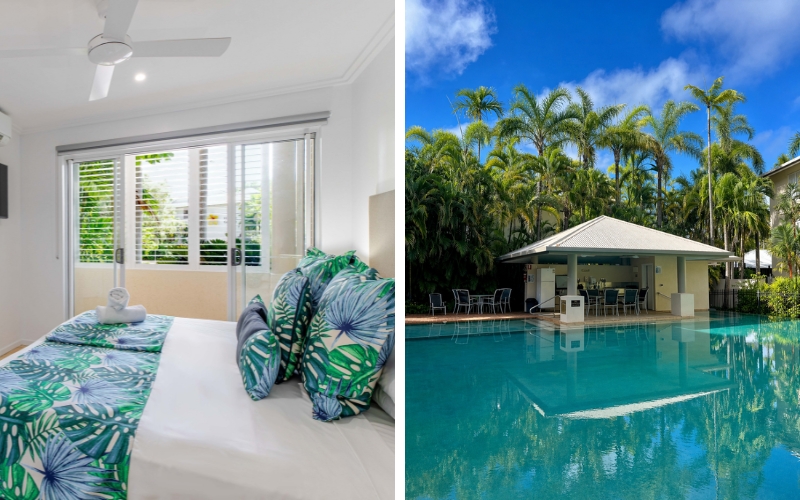
Where to Stay: Cayman Villas as Your Base
Whale season is one of the best times of year to be in Port Douglas. The tropical heat has eased, the town is alive, and the mornings are crisp and clear. Getting the most out of it comes down to where you are staying.
Cayman Villas sits in the heart of Port Douglas, 200 metres from Four Mile Beach and 400 metres from the Crystalbrook Marina where most reef tour operators depart. You do not need a car to get to your boat. You do not need to battle morning traffic. You walk.
The apartments are self-contained — one, two, and three-bedroom configurations with full kitchens, so you can pack your own snacks and cold drinks for the reef day without paying inflated marina prices. The heated pool and tropical gardens give you somewhere to decompress after a long day on the water.
The tour desk at Cayman Villas can assist with bookings for reef tours during whale season, so if you have not locked in an operator before you arrive, that is a good first stop.
Whale season in Port Douglas is June to September. The accommodation fills up. If you are planning around the whales, book your stay early.
Frequently Asked Questions
Whale season runs from June through to September, with peak sightings in July and August. Dwarf minke whales arrive earlier, with the best encounters from May through July around the Agincourt Ribbon Reefs. Humpbacks are most active from July through September.
Yes. Port Douglas is the only place in Australia where you can legally swim with dwarf minke whales. A small number of reef tour operators hold permits from the Great Barrier Reef Marine Park Authority allowing this under strict conditions. Silversonic and Poseidon are two operators currently holding these permits. Swimming with humpback whales is not permitted anywhere in Australia.
It depends on what you are after. Wavelength Reef Cruises is the standout choice for an intimate, marine biologist-led experience with a small group. Silversonic and Poseidon are the best options if swimming with dwarf minke whales is your priority, as both hold the required permits. Calypso Reef Cruises suits those who want a full day on the reef with the option to spot humpbacks from the deck.
Yes, particularly during peak whale season in July and August. Port Douglas’s winter period is its busiest, and the better operators fill up weeks ahead. Wavelength carries a maximum of 50 passengers and is often booked out. Book before you leave home if you are visiting in July.
The best shore-based spot is Flagstaff Hill Lookout, which sits 74 metres above sea level at the northern end of Macrossan Street and offers panoramic views across the Coral Sea. Four Mile Beach is also worth walking during peak season, with humpbacks occasionally visible breaching offshore. Rex Smeal Park at the northern tip of town provides a quieter elevated vantage point.
No operator can guarantee whale sightings. These are wild animals in open ocean and their movements cannot be predicted. That said, multiple sightings per trip are common during peak July and August, and even if whales do not appear, you are still spending a full day on the Great Barrier Reef.
Port Douglas is one of the best bases in Australia for whale watching. The Crystalbrook Marina, where most reef tour operators depart, is a short walk from central accommodation. The town also sits closest to the Agincourt Ribbon Reefs where dwarf minke whales concentrate during the season. Staying centrally, such as at Cayman Villas, means you can walk to your boat without needing a car or dealing with early morning logistics.
Humpbacks are large, dramatic animals known for breaching, tail-slapping, and surface behaviour. They migrate along the Queensland coast from July through September and are most commonly spotted from the boat on the transit to the outer reef. Dwarf minkes are smaller and far more inquisitive. They tend to approach stationary boats rather than avoid them, and they are encountered underwater rather than at the surface. The Port Douglas minke season runs from May through July.
